Feature
Service charge accounting
Budget the year, demand it in instalments, record what comes in and what goes out, then reconcile and close. Built around the lease, not a general ledger.
No credit card required · Full access for 45 days
The whole annual cycle, in one system
Most block software stops at compliance and hands you a spreadsheet for the money. Block Guardian closes the loop — and because the compliance records, the cases and the supplier invoices already live together, the cost of a failed inspection is the cost of a failed inspection.
Schedules & apportionments
Cost pools from the lease, and each unit's share of them
Step 02Budgets & instalments
The year's cost lines, split into the instalments the lease allows
Step 03Demands
Per-unit demands with the prescribed summary, snapshotted
Step 04Ledger, payments & arrears
Receipts, arrears aging, credit notes and write-offs
Step 05Expenditure
Supplier invoices coded to schedule and category, versus budget
Step 06Year-end
Demanded versus actual, then balance the difference and close
Schedules & apportionments
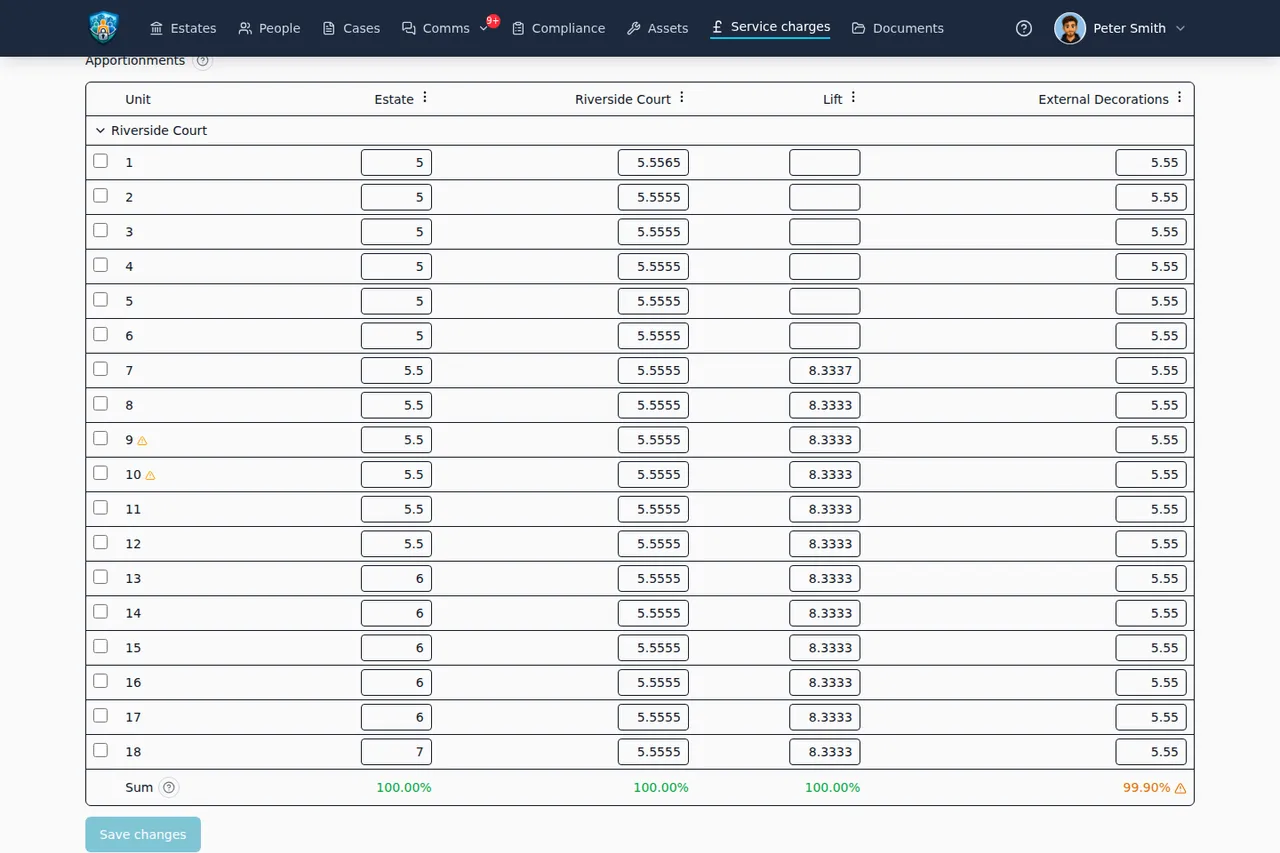
The lease decides who pays for what. A schedule is a cost pool — Estate, Block A, Lift — and each unit holds a percentage share of it. Units that aren't in a schedule simply aren't in it; there are no zero-percent rows to maintain.
- Percentages to four decimal places, entered per unit or split equally with the remainder handled for you
- A schedule that doesn't sum to 100% raises a warning, never a block — because real leases don't always add up, and refusing the figure won't fix the lease
- Structure is a convenience, not a constraint: seed a schedule from a sub-block, then edit membership freely
Budgets & instalments
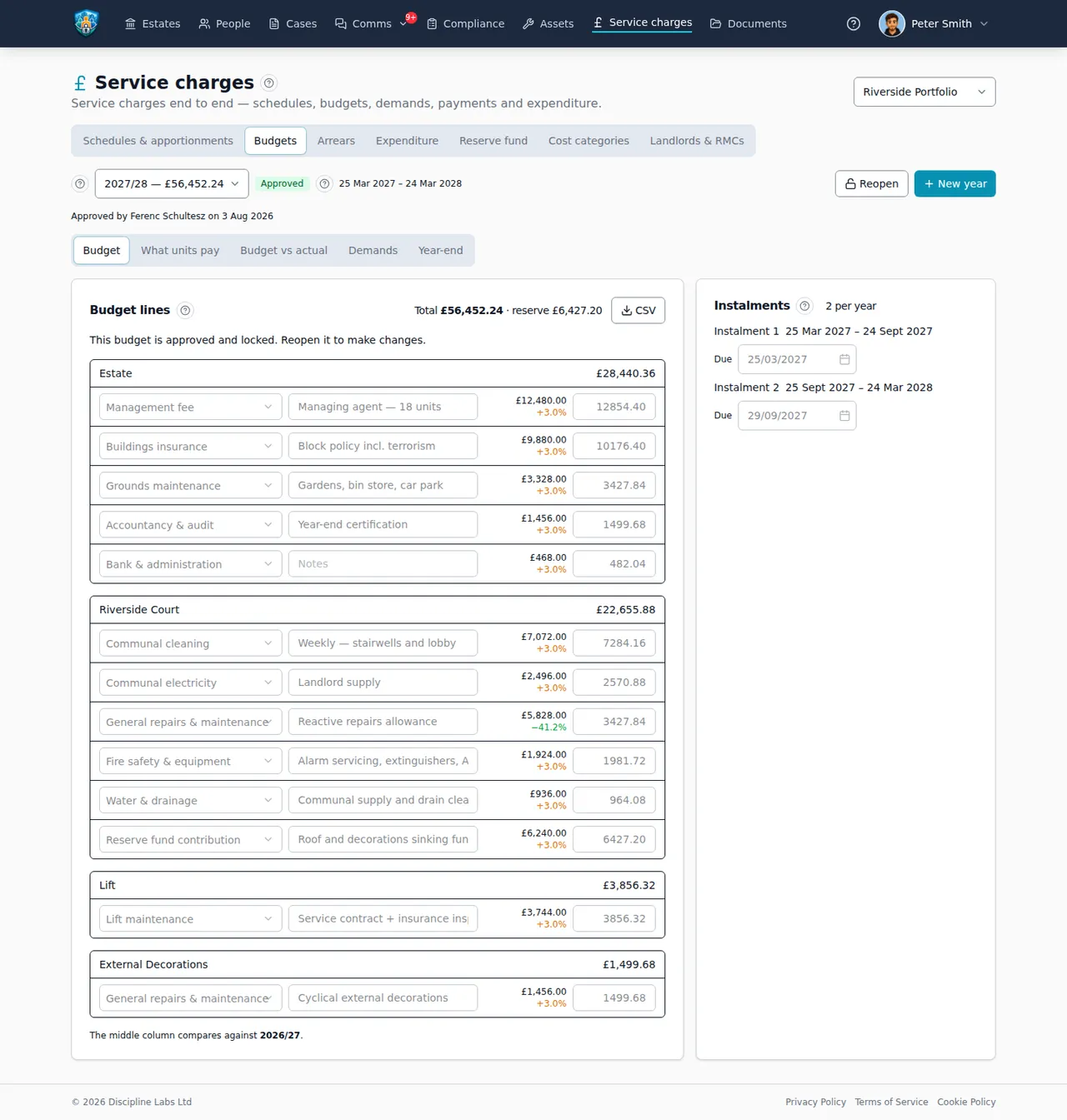
A budget year holds the cost lines for the year ahead. Each line is tagged to the schedule that pays for it and a cost category that says what it's for, so the same year answers both 'what are we spending on' and 'who is being charged'.
- Instalment periods generated from the lease's demand frequency — annual, half-yearly or quarterly
- Per-unit allocation preview before you commit, exportable to CSV
- Reserve fund contributions marked on the cost category, so they subtotal separately from spend
- Approving locks the lines and periods; reopening is possible but refused while demands exist against the year
Demands
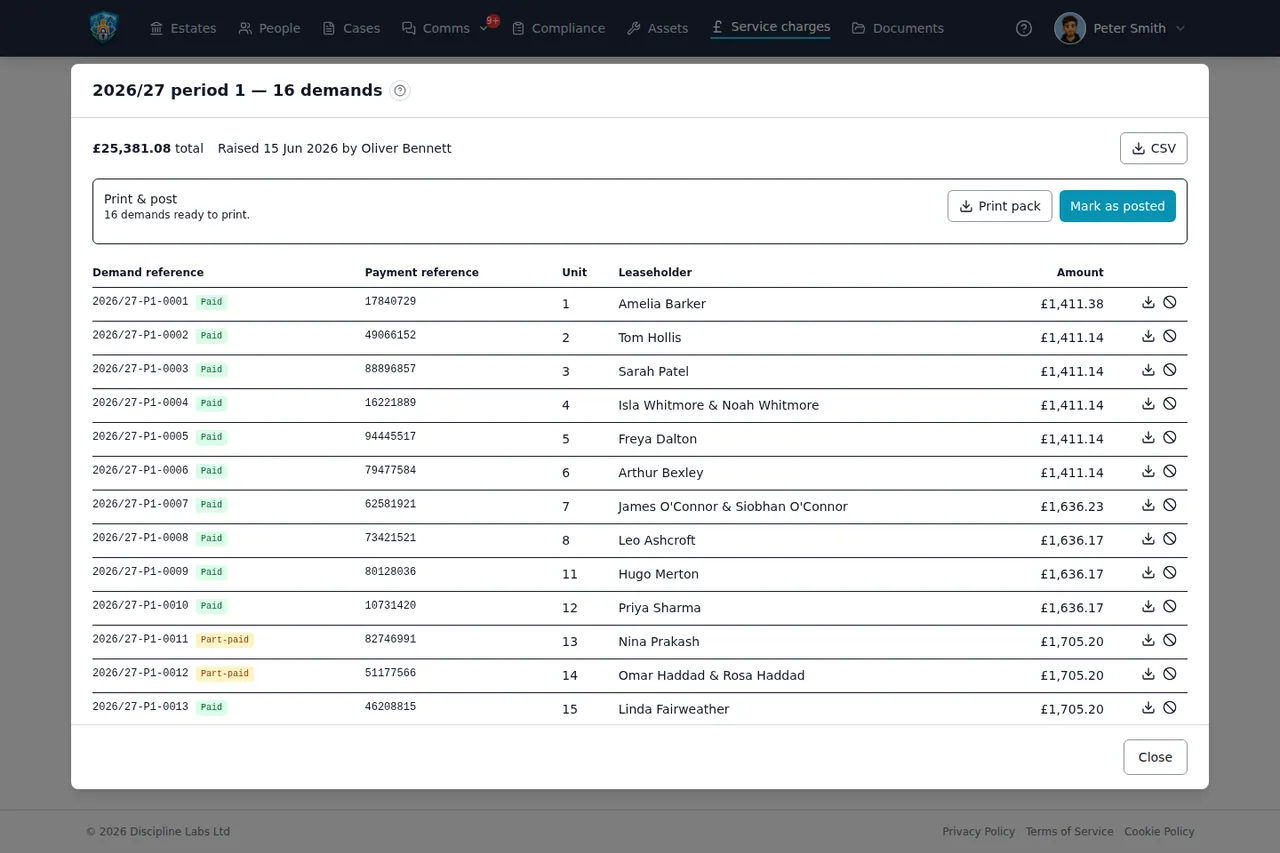
An approved period becomes a demand per unit, grouped into a run that also records why any unit was skipped. Every figure comes from the budget — generation allocates nothing new, so the demand and the preview can never disagree by a penny.
- Everything is snapshotted — leaseholder, correspondence and property addresses, the landlord's details, percentages and amounts — so 'what exactly did you send me?' has one answer years later
- Sequential references per estate and year, never reused
- Issued with the statutory summary of tenants' rights — matching the prescribed statement in SI 2007/1257 as amended, verified against the legislation — and the landlord's name and address for service
- Once posted, the leaseholder can view and download their own demand: the same PDF you sent, never an email
- A missing leaseholder, no schedule membership or a zero charge skips one unit and reports it, rather than quietly billing the wrong person
- Nothing is corrected in place: void with a reason and reissue with a fresh reference, or cancel the whole run
Ledger, payments & arrears
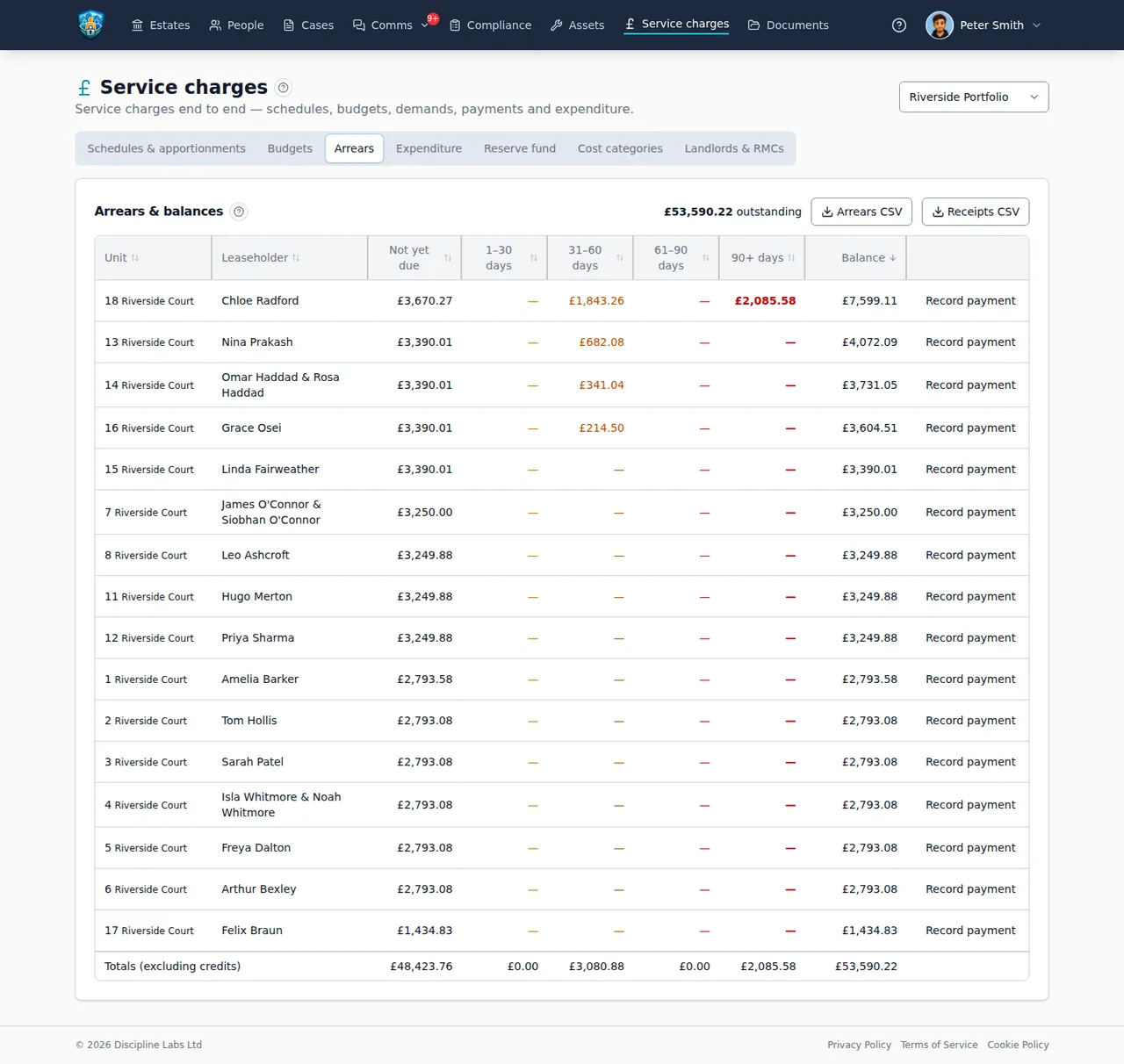
Each unit has an append-only account. Demands post charges dated the day they fall due, so arrears age from the right date. Receipts post against them, and corrections are reversing pairs — nothing is ever edited away.
- Which demands are unpaid is worked out on the fly, oldest first within each fund — never a stored flag that can drift
- Aging buckets and a record-payment action on the row, so chasing happens from one screen
- Credit notes, write-offs and opening balances, all as ordinary ledger entries
- Per-unit statement of account as a PDF
Expenditure
The other half of the year. A supplier register and their invoices, coded line by line to a schedule and a cost category — which is what makes budget versus actual a real comparison rather than a guess.
- Draft invoices for batch entry; recording one requires its lines to sum to the gross exactly
- Budget year is derived from the accounting date, so it's never stale and never needs re-pointing
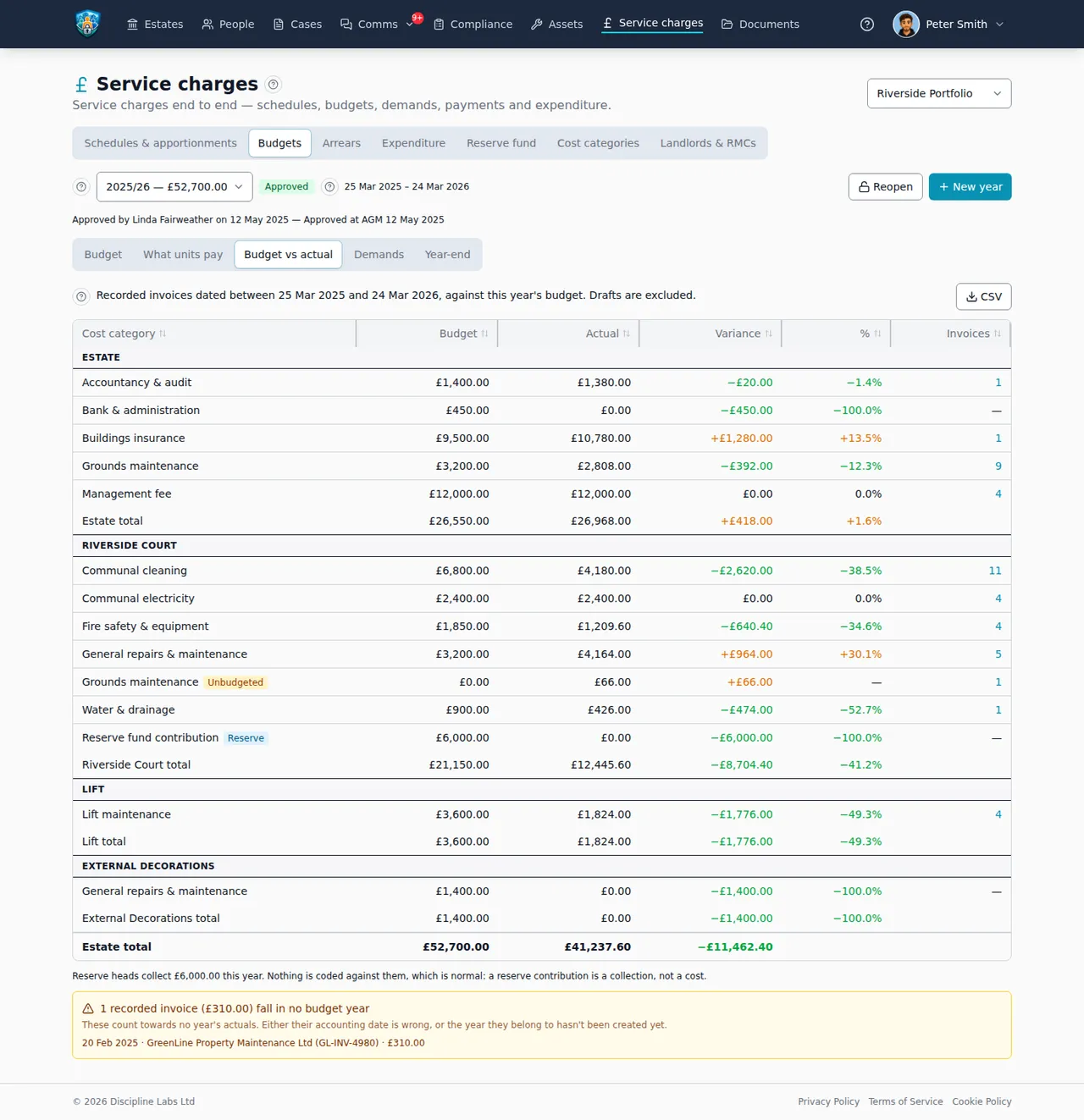
- Budget vs actual per year: variance by cost category, unbudgeted spend badged, and invoices that fall outside any budget year listed rather than dropped
- Cost history per asset — what that lift has actually cost you
Year-end
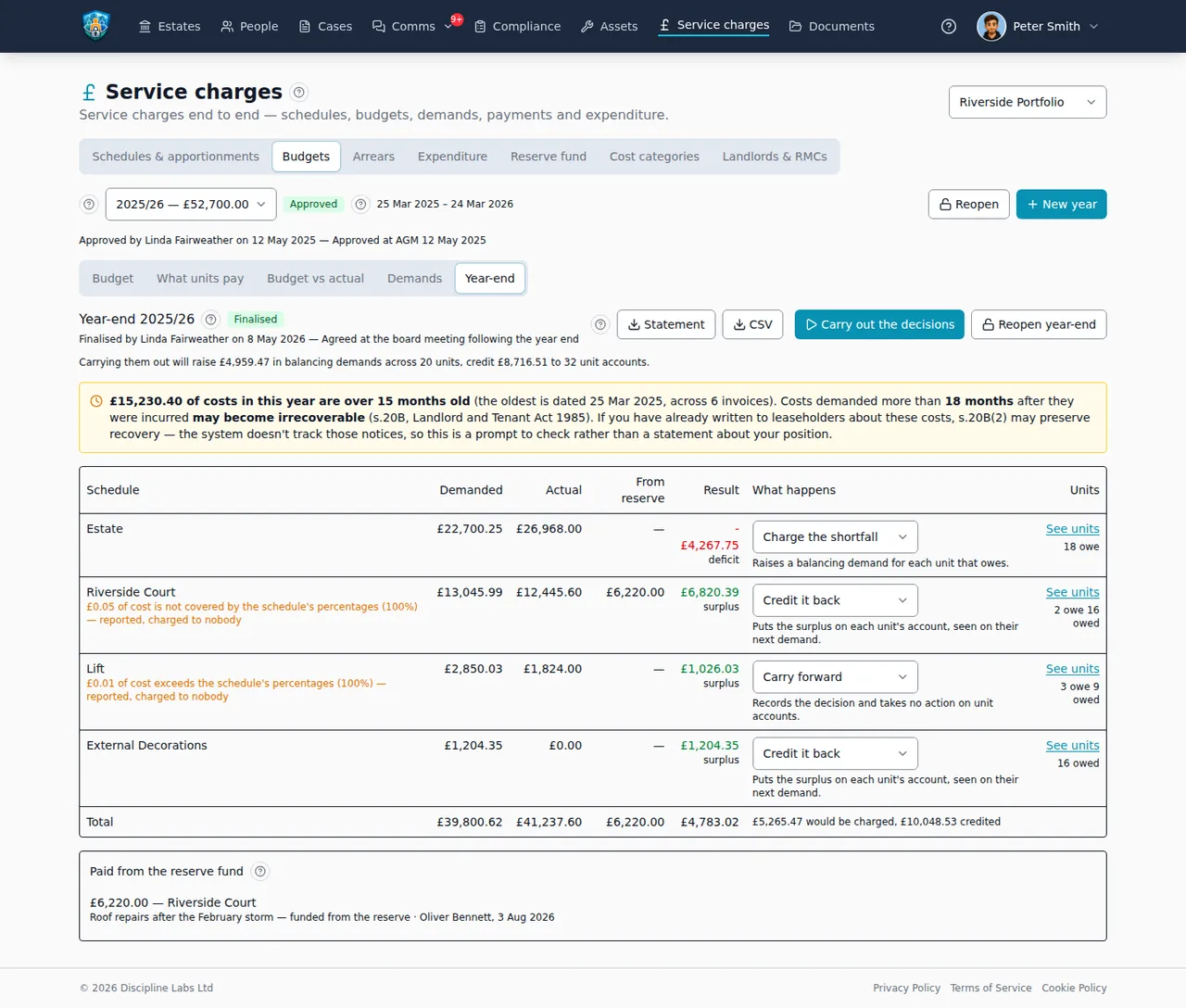
Close the year: compare what was demanded on account against what the year actually cost, decide what happens to the difference for each schedule, then carry the decision out.
- Each leaseholder settles against what they were actually demanded — not against an average — so a unit that was skipped mid-year doesn't quietly land on its neighbours
- Per schedule: charge the shortfall, credit the surplus, transfer to reserve, or carry forward
- Executing raises balancing demands for units that owe and posts credits for units in surplus, in one action
- Finalising locks the year's invoices and its budget; reopening needs a reason
- Year-end statement as PDF and CSV, plus a reserve fund report
The pennies are the point
Service charge arithmetic goes wrong in small, specific ways, and every one of them ends up in a letter from a leaseholder. Block Guardian treats these as rules rather than rounding accidents.
A shortfall in the lease is reported, not absorbed
If a schedule's percentages only add to 95%, the system allocates 95% and tells you about the gap in pounds. It does not quietly put the missing 5% on flat 1.
Rounding remainders go somewhere predictable
Sub-penny remainders land on one unit by a fixed rule, so the per-unit amounts always sum exactly to the total. No drifting balances.
Year-end settles per leaseholder
Each unit is reconciled against what it was actually demanded. Spreading a schedule's surplus or shortfall evenly is the mistake that bills eight flats for a ninth one's missing demand.
Worked example
Eight flats, one schedule, £1,440 to settle at year end — but flat 8 was never demanded because its lease had no recorded leaseholder for the period.
Spread evenly
8 × £346.25 — every flat pays £156.25 towards a demand that was never raised against their neighbour.
Settled per unit
7 × £190, and flat 8 carries its own £1,440. Each leaseholder settles against what they were actually asked for.
What it deliberately doesn’t do
You are going to ask these questions on a demo call, so here are the answers first.
It doesn't take payments
No card processing, no direct debit, no bank feed. Payment details are printed on the demand and the leaseholder pays you directly. Recording a receipt is bookkeeping, not collection.
Demands are posted, not emailed
Demand PDFs merge into a print pack, and you mark the run as posted with the method and date. Posting is how a demand is served — nothing is sent electronically and nobody is notified. Leaseholders can look at their own demands afterwards, but that's a copy of what went through the door, not a second channel.
The money is staff-only
Budgets, schedules, the ledger, arrears and expenditure are for the people managing the block. The one exception: a leaseholder sees the demands raised against their own flat once they've been posted, and nothing else. A tenant who isn't on the lease sees nothing at all.
England only, and enforced
The statutory summary shipped with every demand is the England version. Wales prescribes different, bilingual wording, so an estate set to Wales is refused at generation rather than served the wrong form. Everything outside demands works for Welsh blocks.
It isn't your certified accounts
The year-end statement reports the position and gives your accountant what they need. It isn't a statutory summary and nobody has signed it. Your accountant still prepares the accounts.
No accounting integration yet
There's no Xero, QuickBooks or Sage export, and no bank reconciliation. Figures come out as CSV and PDF.
Block Guardian tracks and calculates; it does not certify. It is not a substitute for a qualified accountant or for legal advice on your leases. Landlord and Tenant Act 1985 governs most of what appears on this page.
The money knows about the building
Because compliance items, cases, assets and suppliers share one system, a supplier invoice can be coded against the lift it was for, and that lift’s cost history sits next to its LOLER examinations. Nothing has to be cross-referenced by hand.
Run the whole year in one system
Start your free 45-day trial. No credit card required.